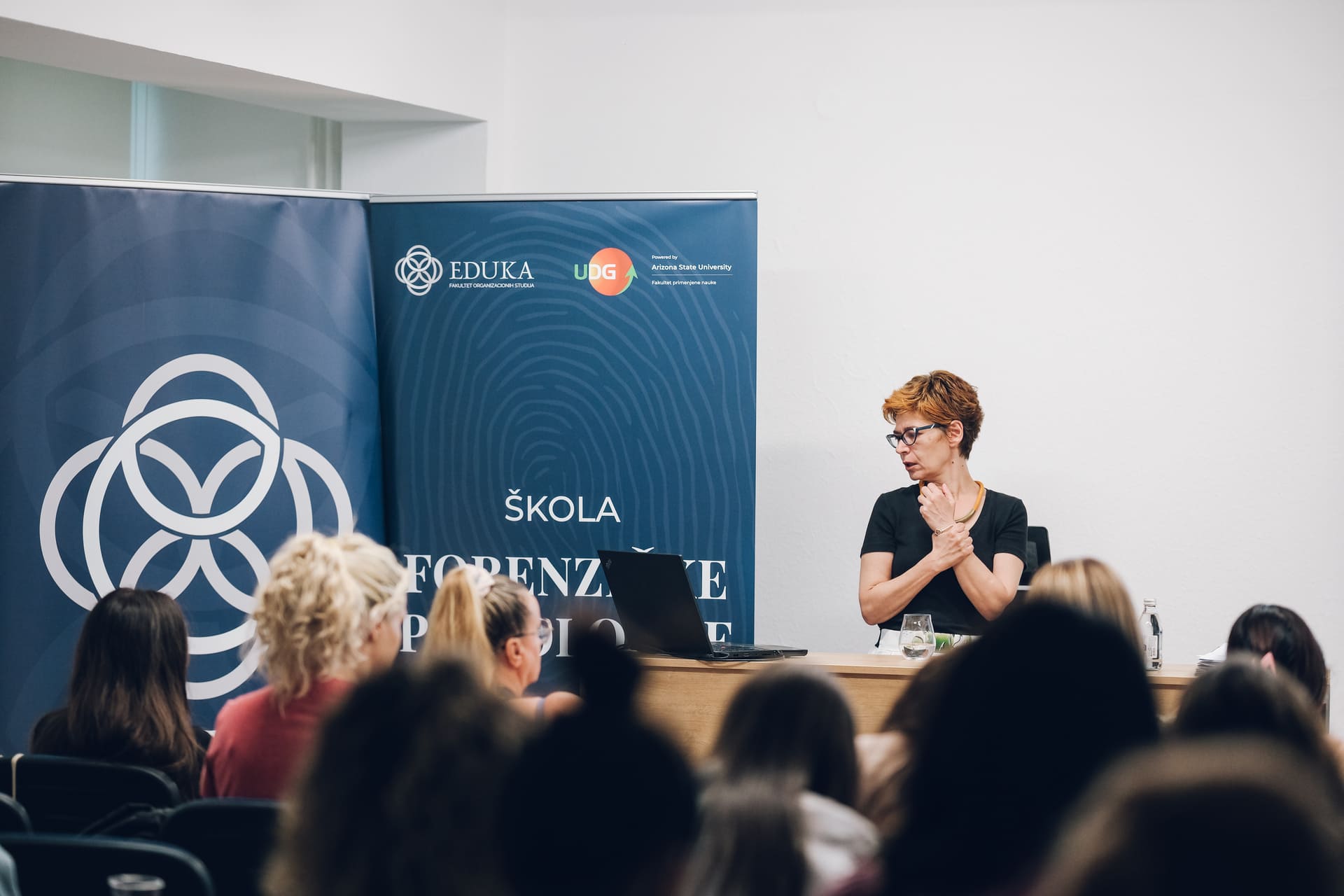

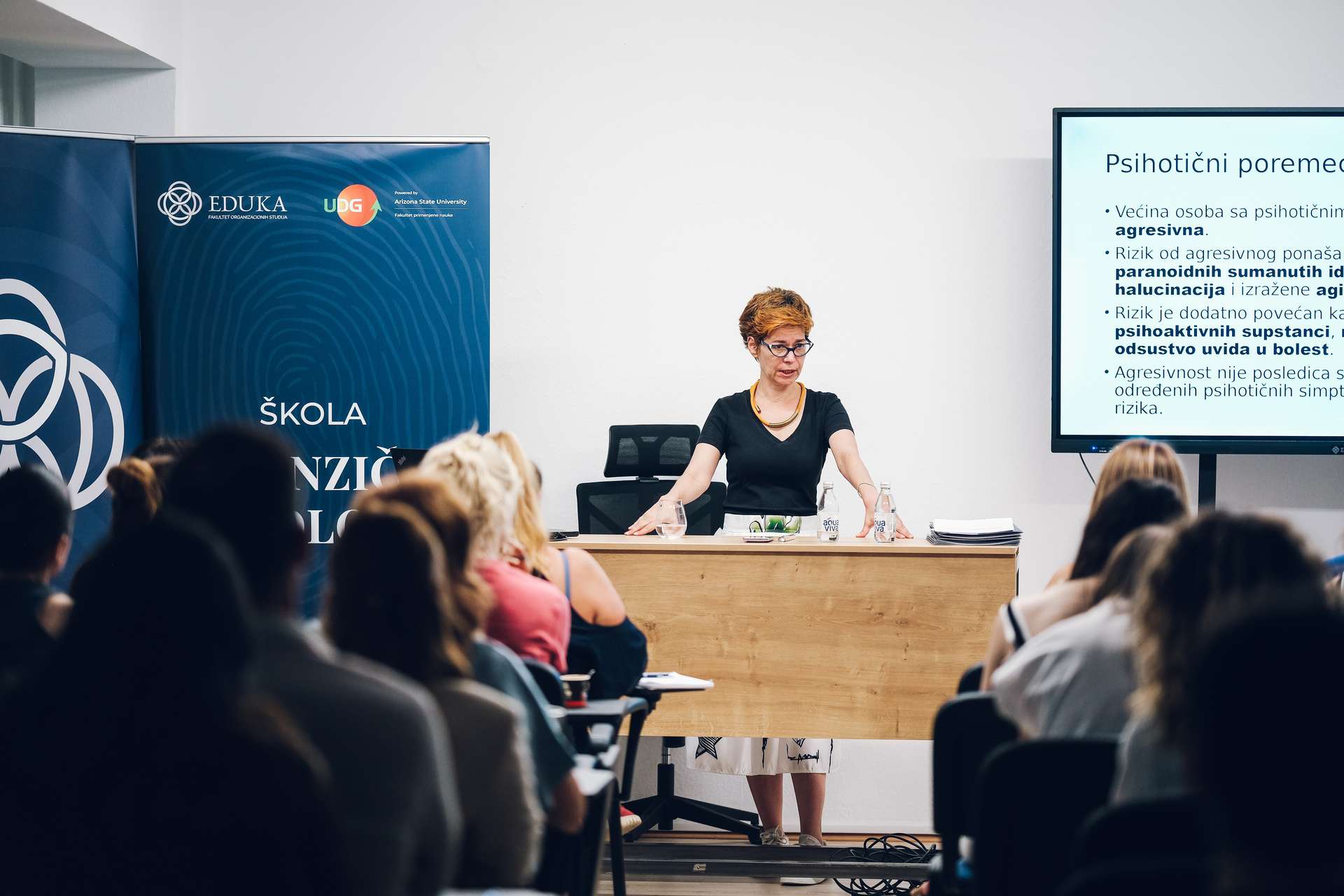
As part of the Summer School of Forensic Psychology, Prof. Dr. Ksenija Kolundžija delivered highly informative and professionally significant lectures dedicated to the assessment of aggressive and violent behavior, as well as the practical aspects of psychological-forensic expert evaluation.
The first part of the lecture focused on understanding the factors that contribute to the emergence of violence, with particular emphasis on identifying early indicators and risk assessment. Prof. Kolundžija introduced participants to the biopsychosocial model, highlighting the complex interaction of genetic predispositions, personality traits, family environment, and the broader social context.
Special attention was given to clinical predictors of violent behavior, including the role of mental disorders, substance abuse, and personality disorders. Participants had the opportunity to learn about contemporary approaches to structured risk assessment, as well as the instruments used to evaluate the likelihood of repeated violent acts.
The second part of the lecture was dedicated to presenting a real case study from forensic practice, directly linking theoretical knowledge with the challenges of court proceedings. Through a detailed analysis of the case history, personality structure, and motives of the offender, participants gained insight into the complexity of psychological expert evaluation in cases of violent behavior.
Prof. Kolundžija presented the methodology of work, including the application of psychological tests, forensic interviews, and the analysis of available documentation. A particularly important segment focused on differential diagnosis, that is, distinguishing between affective states, conscious intent, impulsivity, and possible malingering.
In the practical part of the lecture, participants were guided through the key stages of psychological-forensic evaluation, from the court order to the formulation of findings and expert opinion. It was explained how the task of expert evaluation is defined within the legal framework and how psychologists translate professional findings into language that is understandable and applicable for the court.
Special emphasis was placed on drafting the findings and expert opinion, as a document that must be methodologically precise, professionally justified, and legally relevant. Participants also gained an understanding of the importance of expert testimony in court, including defending findings before a judicial panel and responding to cross-examination.
The interactive discussion enabled participants to connect theoretical models, clinical assessment, and procedural requirements of court proceedings.
The lectures of Prof. Dr. Ksenija Kolundžija demonstrated how demanding forensic psychology is as a field, requiring high expertise, methodological discipline, and professional responsibility. Through this content, the Summer School of Forensic Psychology once again confirmed its mission to provide participants with modern, applicable, and scientifically grounded knowledge.
The lectures of Prof. Dr. Ksenija Kolundžija represent one of the key contributions to the program, as they clearly connected the theory of aggression, risk assessment, and real-world forensic expert practice.