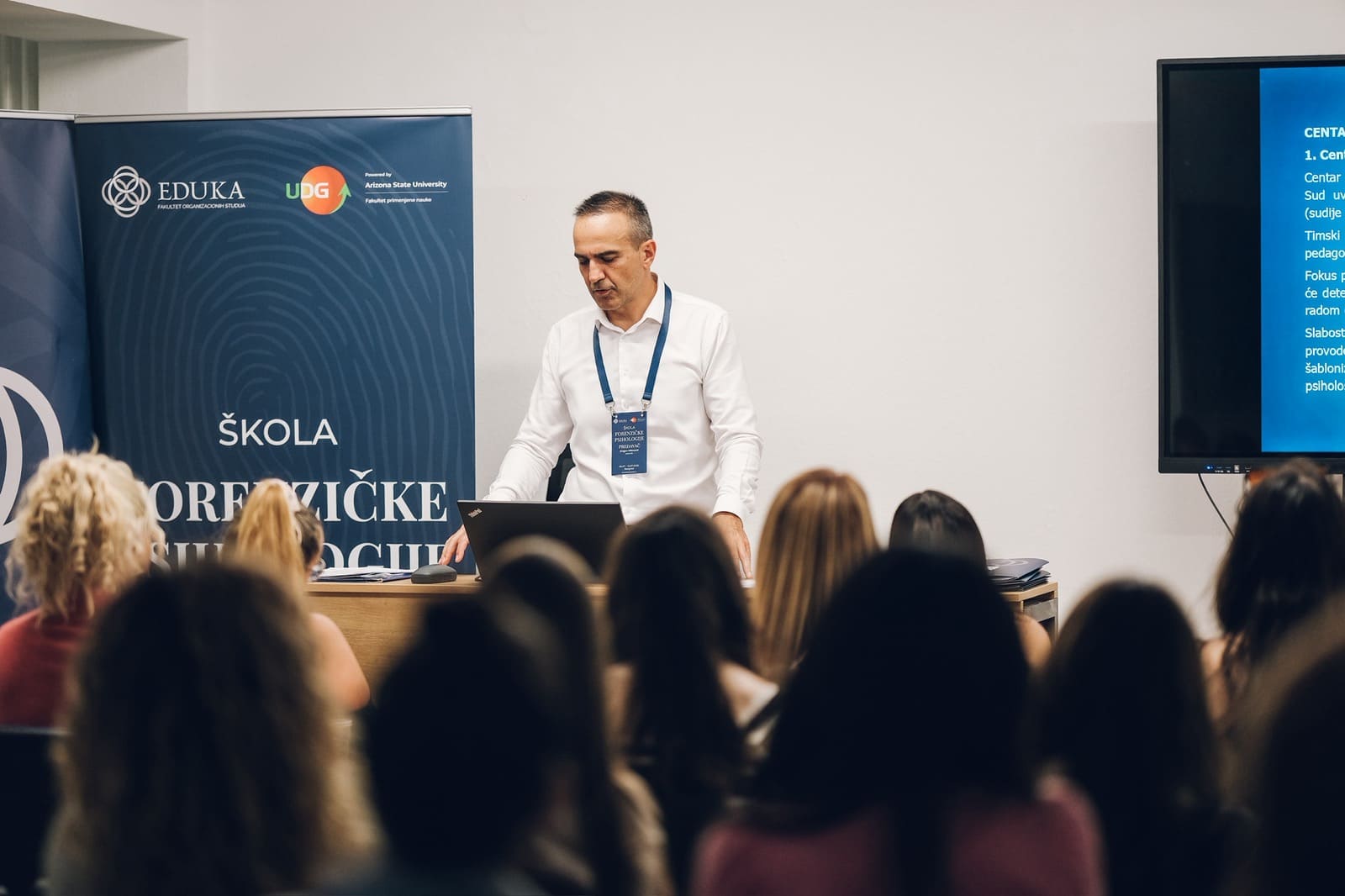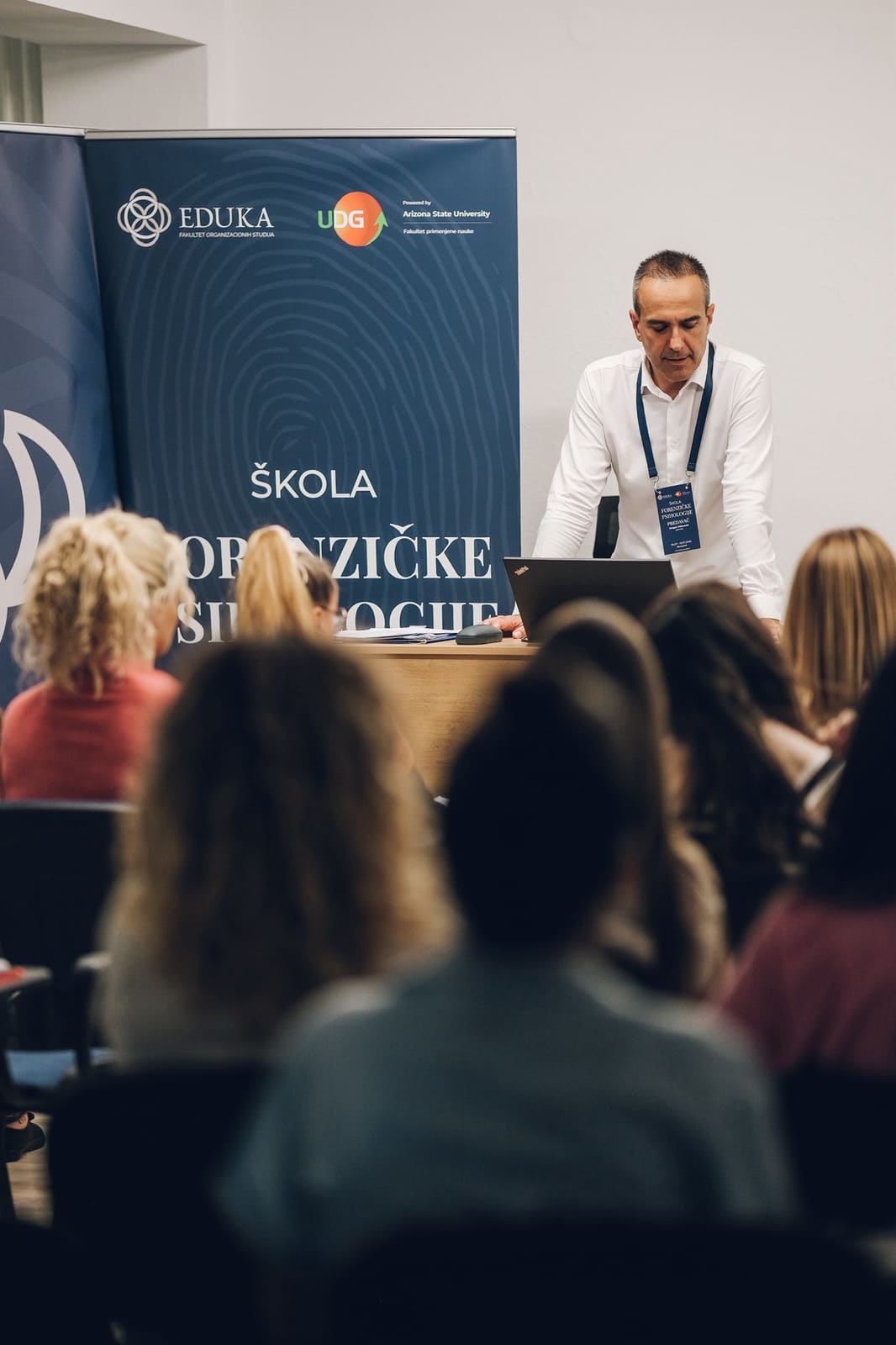

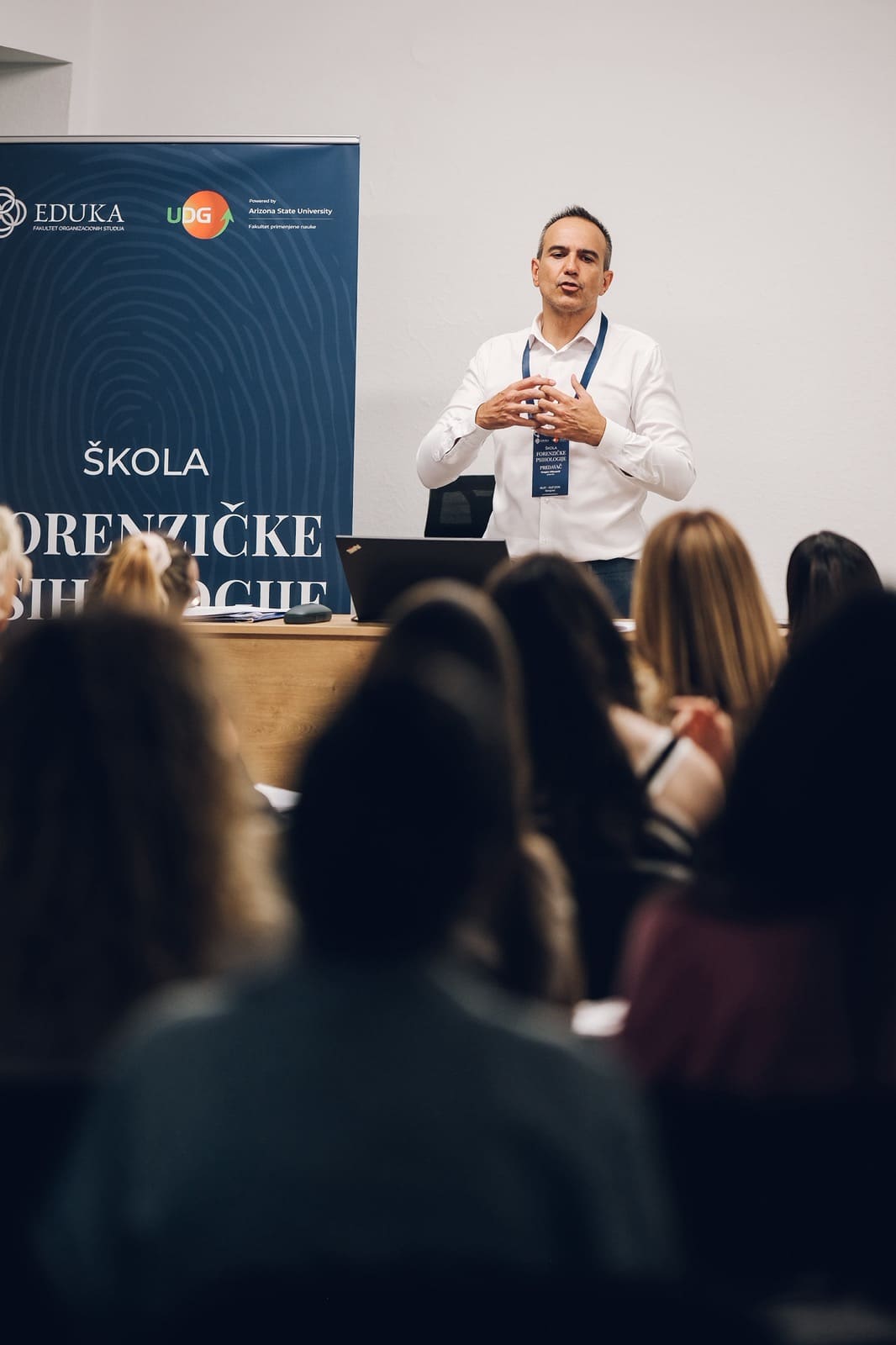
As part of the Summer School of Forensic Psychology, attorney Dragan Mileusnić delivered a highly dynamic and professionally grounded lecture dedicated to the use of psychological findings in court proceedings.
Drawing on his extensive legal practice, he introduced participants to the ways in which forensic psychological reports are used in shaping litigation strategy, representing clients, and contributing to fair judicial decision-making. It was particularly emphasized that courts do not possess specialized knowledge in forensic psychology, which makes the role of attorneys, expert witnesses, and professional consultants crucial for the proper understanding of psychological facts.
The lecturer explained how attorneys analyze the psychological profile of their client or the opposing party and, based on that, develop defense or representation strategies. One of the central segments of the lecture focused on formulating precise, legally relevant, and professionally oriented questions for expert witnesses.
Participants had the opportunity to understand how important it is for attorneys to be familiar with the methodology of psychological expert evaluation in order to identify shortcomings, contradictions, or insufficiently substantiated conclusions in expert findings and opinions.
Special attention was devoted to the relationship between the court, expert witnesses, and attorneys as three key actors in proceedings where psychological expertise can have a decisive impact. In this context, the procedures for initiating expert evaluation, submitting proposals to the court, issuing court orders, and defining the tasks of expert witnesses were explained.
The lecture also covered the attorney’s right to engage a professional consultant for the purpose of analyzing, verifying, or challenging the official findings of a court-appointed expert witness. Particular interest among participants was sparked by the segment dealing with the main hearing, direct examination, and cross-examination of expert witnesses before the judicial panel.
Through real, anonymized cases from practice, attorney Mileusnić demonstrated how a multidisciplinary approach combining law and forensic psychology is applied in concrete court situations.
Examples from family disputes and guardianship proceedings were analyzed, particularly in cases of high-conflict divorces, assessment of parental competencies, personality structure, and potential risks to the child.
In the segment on criminal proceedings, cases were presented in which the assessment of criminal responsibility, emotional state, and psychological characteristics of the offender had a direct impact on the legal qualification of the offense or the severity of the sentence.
The lecturer also provided an overview of specific property disputes and complex procedural situations in which cooperation between attorneys, psychologists, psychiatrists, and other experts becomes essential for the proper establishment of facts.
The interactive discussion demonstrated a strong interest among participants in the practical aspects of court proceedings and the real-world application of psychological knowledge in legal practice.
This lecture brought valuable legal perspective to the Summer School of Forensic Psychology and further confirmed the importance of integrating psychology, law, and judicial practice in the modern education of professionals.