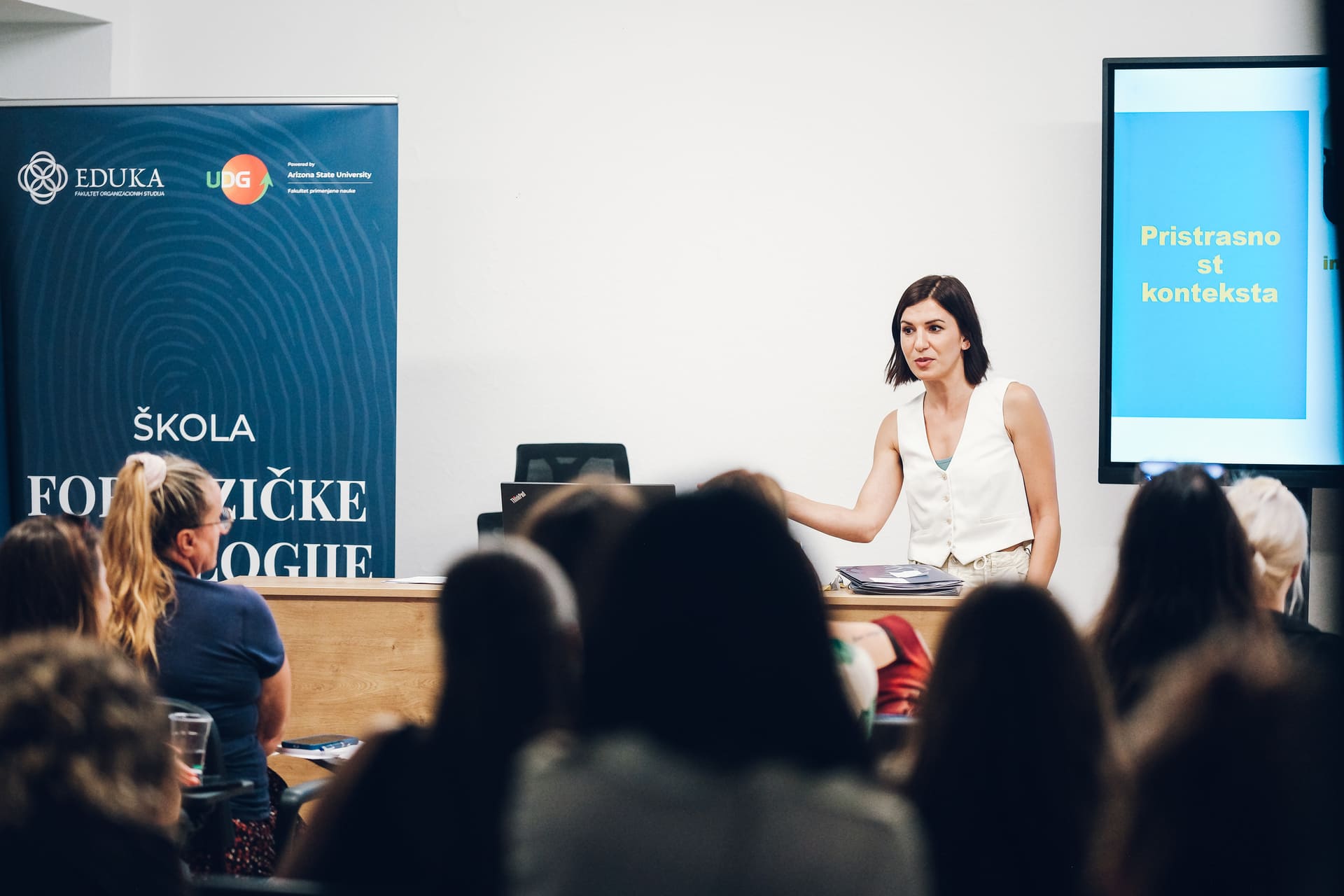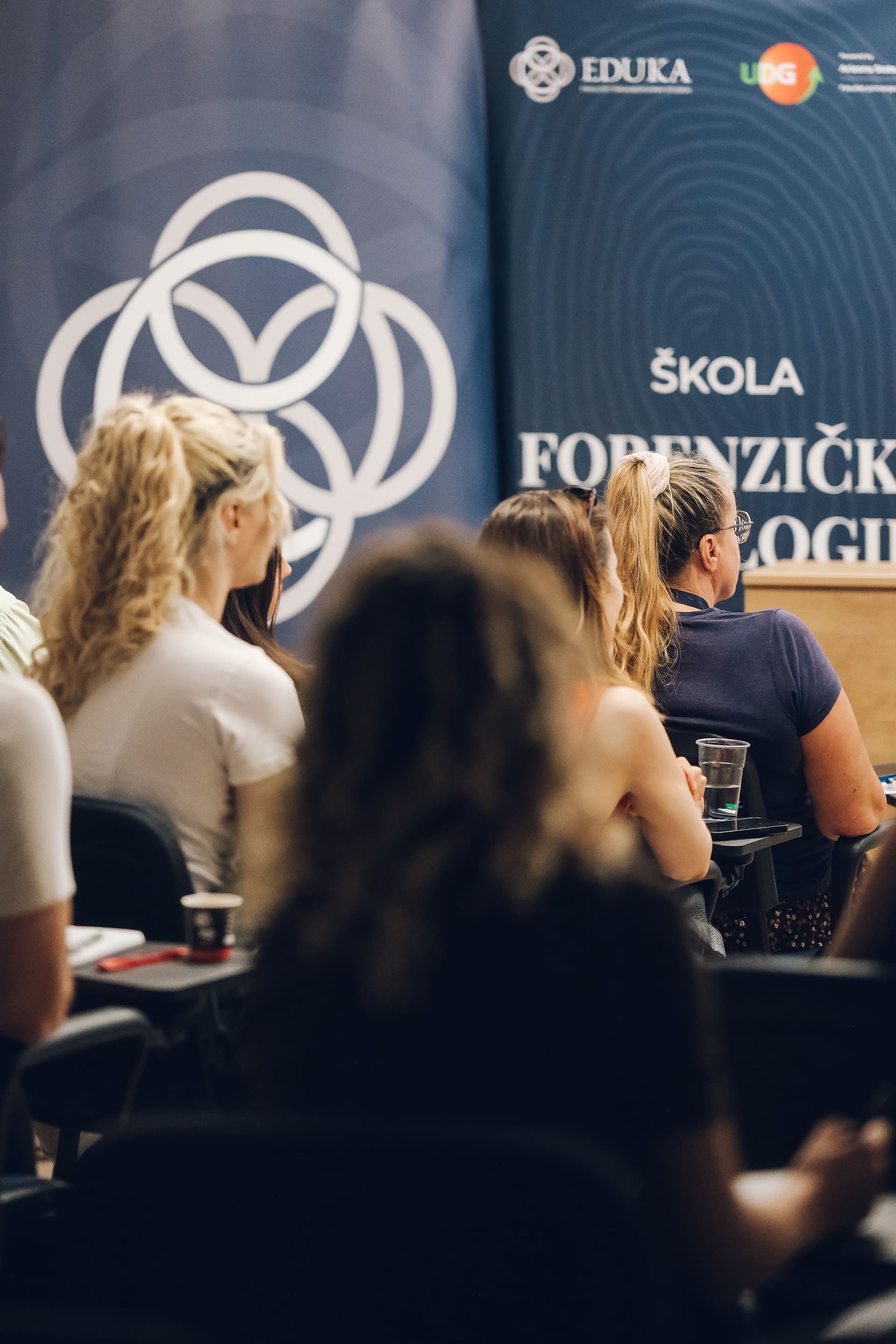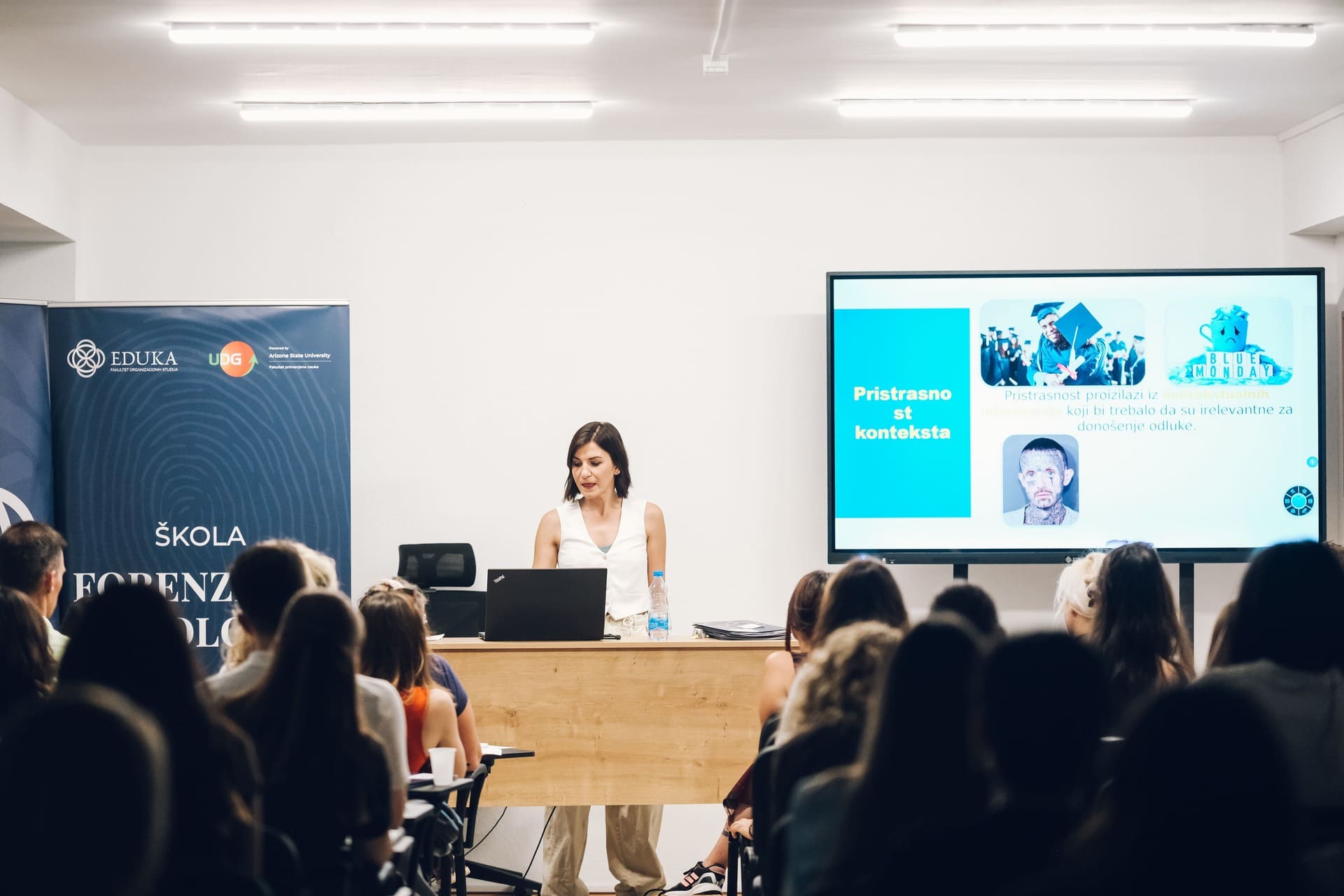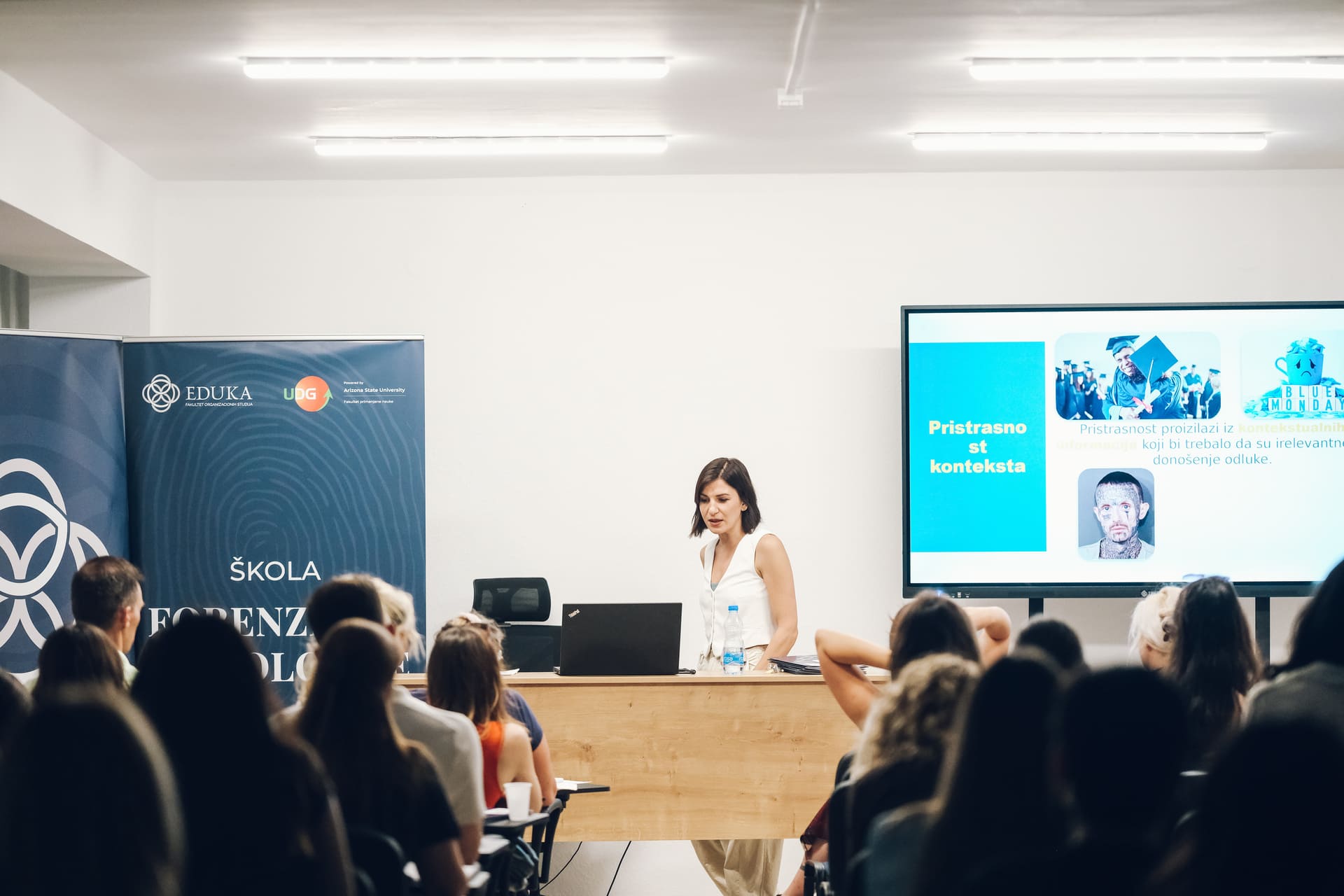

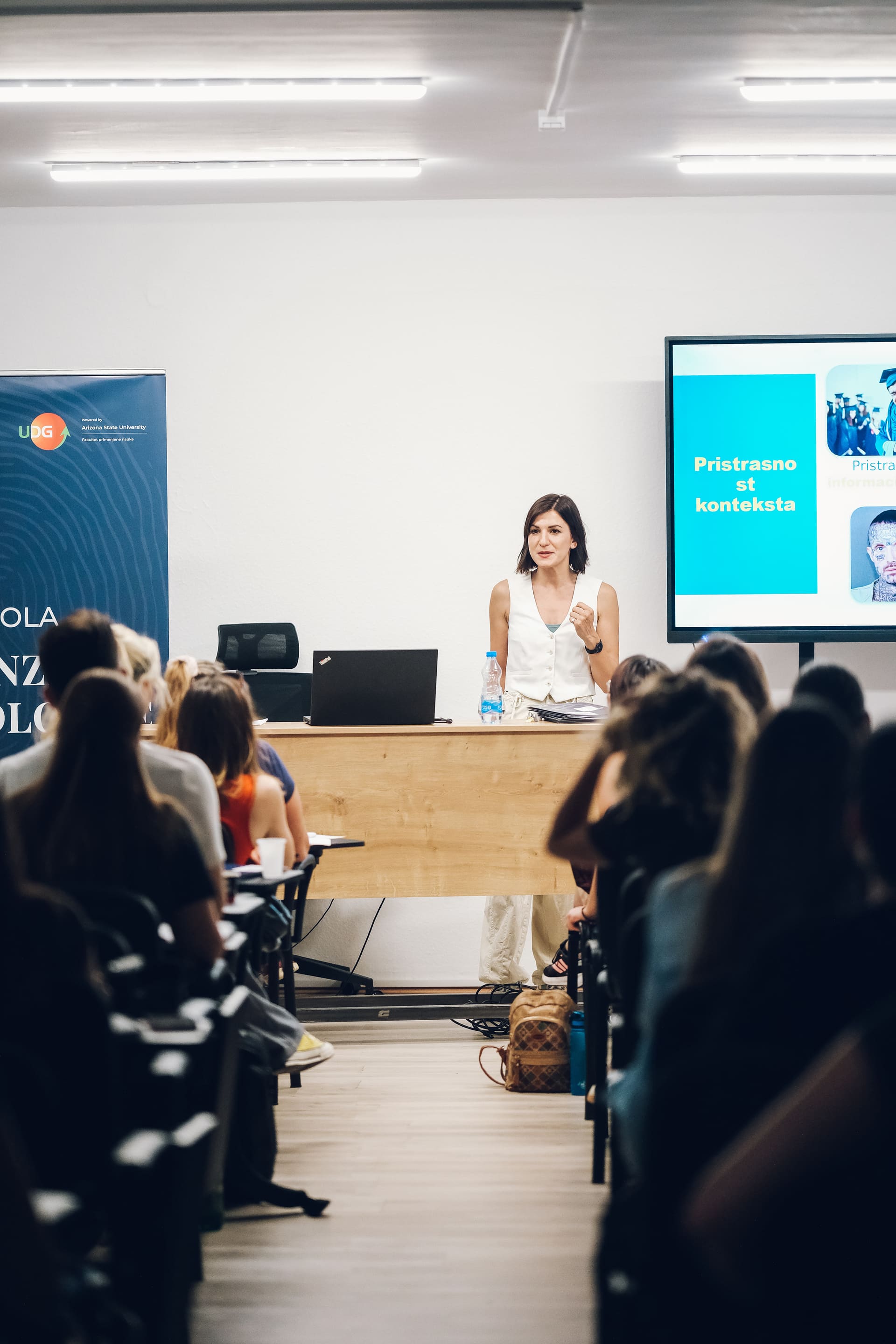
As part of this year’s Summer School of Forensic Psychology at the Faculty of Organizational Studies “Eduka,” a highly notable and dynamic lecture was delivered, addressing one of the most important questions in contemporary forensic practice: how human thinking, even when expert and professional, can become a source of serious errors in assessment, investigation, and judicial decision-making.
The lecture was delivered by Associate Professor Dr. Irena Bošković from the Faculty of Philosophy, University of Novi Sad, whose scientific and professional work lies at the intersection of clinical and forensic psychology, with a particular focus on credibility assessment, deception detection, cognitive biases, and the analysis of the reliability of psychological findings. Through a highly актуелан and practically oriented approach, Prof. Bošković introduced participants to the complex world of decision-making within judicial and investigative systems, emphasizing that forensic work depends not only on facts and evidence, but also on how experts perceive, interpret, and connect them.
The central part of the lecture was devoted to three key factors that can undermine the objectivity of forensic assessment: biases, heuristics, and logical errors. Prof. Bošković explained in detail how stereotypes about perpetrators, victims, or “typical” patterns of behavior can unconsciously direct investigators toward incorrect conclusions. Special attention was given to heuristics—mental shortcuts that experts often use under conditions of time pressure, stress, and large volumes of information, but which can lead to premature conclusions, neglect of important evidence, and misinterpretation of behavior.
One of the most significant segments of the lecture addressed confirmation bias, that is, the tendency to give greater weight to evidence that supports an initial assumption, while underestimating or ignoring contradictory indicators. Through this topic, participants were able to understand how dangerous it is in forensic work to form a hypothesis too early and how important it is to maintain analytical distance throughout the entire assessment process.
The lecture was particularly enriched by extensive practical work. Through carefully designed practical examples, realistic case studies, and interactive exercises, participants had the opportunity to recognize their own cognitive “blind spots,” analyze their decision-making processes, and test whether their observations were truly free from bias. Practical tasks included the analysis of forensic interviews, witness statements, the process of suspect identification, as well as methods for recognizing fabricated or exaggerated psychological symptoms.
The lecture emphasized that expertise in forensic psychology does not only imply knowledge of theory and methods, but also the ability to continuously question one’s own conclusions. For this reason, the final discussion focused on the importance of ongoing self-reflection, the application of scientifically grounded protocols, and the implementation of clear procedures that reduce the space for human error in judicial processes.
The lecture by Dr. Irena Bošković represented an extremely valuable contribution to the Summer School of Forensic Psychology, as it demonstrated to participants that one of the greatest challenges in forensic work is the ability to think critically, cautiously, and in a scientifically grounded manner. Through the integration of theory, practical simulations, and expert discussion, participants gained valuable insight into how psychology can contribute to a more just, precise, and responsible judicial system.