
How do social media shape our well-being? How much does partner support influence mothers’ mental health? What challenges do authors of scientific publications face? These are just some of the questions explored by lecturers from the Faculty of Organizational Studies “Eduka” at the scientific conference “Contemporary Trends in Psychology” (STUP 2026), held from 22 to 24 October at the Faculty of Philosophy, University of Novi Sad.
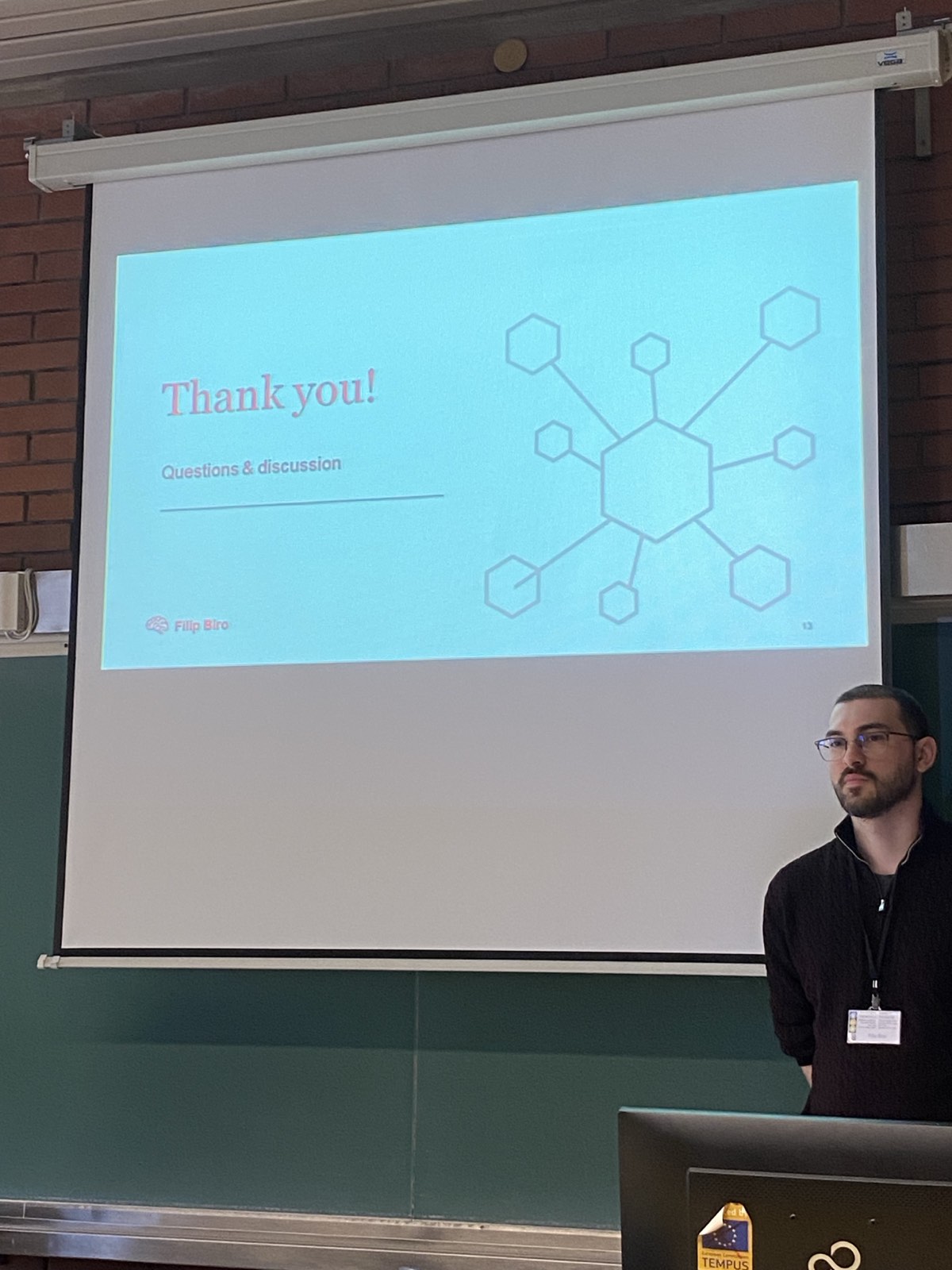
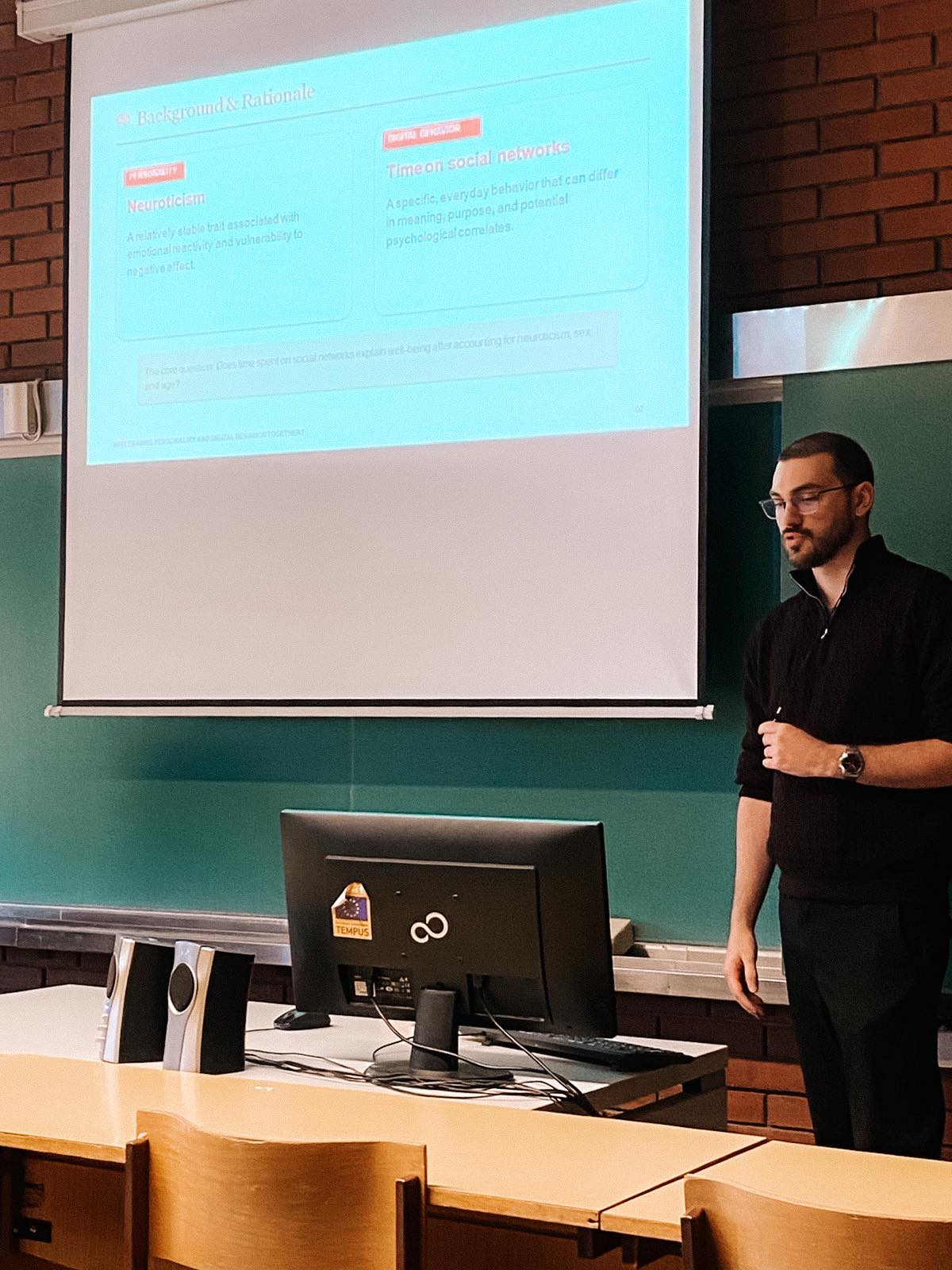
The digital world, personality, and subjective well-being were the focus of the study “The Contribution of Time Spent on Social Media and Neuroticism to the Prediction of Subjective Well-Being”, co-authored by doctoral researcher Filip Biro and Assistant Professor Bojana Grahovac. Presenting the findings, Filip Biro highlighted the importance of neuroticism as a predictor of subjective well-being, as well as the small but positive contribution of time spent on social media. These findings invite further examination of simplified assumptions about the relationship between digital activities and mental health.
Mothers’ mental health and the importance of partner support were the focus of the second research presentation, delivered by Prof. Anida Vrcić Amar, PhD, as part of the symposium “Silence Is Not Golden: The Psychology of Reproductive Health”. The study “Perceived Partner Support and Maternal Depression During the Prenatal and Postpartum Periods” highlighted the importance of partner support and the timely recognition of depressive symptoms. Particular emphasis was placed on the need to involve partners in psychosocial support programmes during pregnancy and after childbirth.
From scientific research to publications that contribute to professional practice, Prof. Dušanka Đurović, PhD, took part in the panel discussion “Why (Not) Take Up Scientific Writing?”, during which the book “Forensic Psychology – A Guide to Psychological Expert Assessments” was presented. The discussion addressed important questions concerning the challenges of academic writing, authors’ responsibilities, and the importance of connecting scientific findings with professional practice.
Through its participation in STUP 2026, FOS Eduka further reinforces its approach to education, in which scientific research is not separate from teaching and practice, but serves as a foundation for developing critical thinking, evidence-based reasoning, and the professional competencies of future psychologists.